February 28, 2010

Your Right to Bail is in the United States Constitution

After an arrest a detained person is brought before an impartial magistrate (a judge) and has a right to a reasonable condition of release. It is the law. The only exceptions to bail are for capital charges, armed drug trafficking, kidnapping and some federal terrorist charges. At the bond hearing you have the right to be represented by an attorney. The magistrate must set a reasonable bond. A reasonable bond is one that is possible for the individual, not some arbitrary amount or standard bond. Pre-trial release is a favored program in Fort Lauderdale, where it has been recently expanded to permit non-indigent criminal defendants to be released with GPS monitors and travel restrictions. All criminal courts in South Florida hold bond hearings 365 days a year. Miami criminal courts, both federal and Florida criminal courts, set conditions of bond that permit the posting of a guarantee by personal surety, Fort Lauderdale (Broward County) does not: there you are required to post the cash amount or have a bond agent issue a “power number” for the bond amount.

Bookmark and Share

February 15, 2010

What Are Federal Criminal Courts and How Do They Differ from Florida Criminal Courts?

Our national government in Washington, D.C. duplicates many Florida criminal laws. Florida criminal laws are enforced by the State of Florida in our State criminal courts. The U.S. government enforces its own set of federal criminal laws in federal criminal courts. Criminal defense attorneys have to be licensed to appear in each court. Florida criminal courts are conducted under the Florida Rules of Criminal Procedure. Federal criminal courts have their own Federal Rules of Criminal Procedure. The rules are very different and being familiar with them is essential for criminal defense lawyers. Filing dates and times, rules of evidence, motion practice; all differ significantly. Federal criminal cases have different views of search and seizure, confessions, proper and improper police procedures than Florida criminal laws. Florida has its own constitution which differs from our U.S. federal constitution. Although Florida constitutional rights can give greater protections and safeguards from governmental reach into the lives of Florida residents it cannot lessen or diminish those rights guaranteed by our federal constitution..

Bookmark and Share

June 18, 2009

Florida Prosecutions of Mortgage Fraud: Part 14 Final

In conclusion of Attorney Ralph Behr's personal thesis on mortgage fraud prosecution:

On the other hand, this defense would not be legally cognizable under § 817.545, Fla. Stat. (2009) and two other federal statutes aforementioned.115 § 817.545, Fla. Stat. (2009) concerning violations committed during the mortgage lending process do not require a person or entity to rely or to be injured by a defendant’s fraudulent activity it is enough that “..any material misstatement, misrepresentation, or omission…” is made “…with the intention that the misstatement, misrepresentation, or omission will be relied on…”116 This statute is more aligned with two other federal statutes punishing statements or omissions on applications or forms submitted to federally approved agencies that are in the business of extending credit, 18 U.S.C. § 1010 (2009) and 18 § U.S.C. 1014 (2009). The actual submittal of these forms or applications for loan or credit advances coupled with either the “…intent that such loan or advance of credit shall be offered to or accepted…”117 or “…for the purpose of influencing in any way the action of…” any federally approved agency in the business of extending credit118 would be sufficient for a conviction under either statute.


___________________________

Any use of the previous article requires written permission from Attorney Ralph Behr and from this website and its subsidiaries under State and Federal Law. DO NOT copy and use the text provided above and/or publish as your own. The document may only be used for private study or distributing among peers in paper, not on internet transmission, with no intent to make profit or sell without credit being due to the original author.

Continue reading "Florida Prosecutions of Mortgage Fraud: Part 14 Final" »

Bookmark and Share

June 17, 2009

Florida Prosecutions of Mortgage Fraud: Part 13

§ 877.54, Fla. Stat. (2009) should be reduced to an attempt because the crime was not completed.108 The defendant reasoned the corporation “…was not deceived as a result of any false representations and issued the check in an attempt to lure her presence and facilitate her arrest.”109 The court agreed with the defendant and determined the record did “…not demonstrate reliance by the victim on the defendant’s misrepresentations.”110

Furthermore, § 877.54, Fla. Stat. (2009) and § 877.10, Fla. Stat. (2009) are similar to the mail, wire and bank fraud statutes because it is evidence of a defendant’s involvement in “…the scheme to defraud and not actual fraud that is required.”111 “No particular type of victim is required…nor need the scheme have succeeded.”112 Although the government need not prove there is any reliance or injury, it must prove beyond a reasonable doubt the evidence shows a “…willful participation in [the] scheme with knowledge of its fraudulent nature and with intent that these illicit objectives be achieved.”113 However, a defendant may have a complete defense to wire fraud, bank fraud, or money laundering negating the specific intent element of the statutes if a jury determines a defendant acted in a good faith belief his or her actions were not illegal.114

___________________________

Any use of the previous article requires written permission from Attorney Ralph Behr and from this website and its subsidiaries under State and Federal Law. DO NOT copy and use the text provided above and/or publish as your own. The document may only be used for private study or distributing among peers in paper, not on internet transmission, with no intent to make profit or sell without credit being due to the original author.

Bookmark and Share

June 8, 2009

Florida Mortgage Fraud Prosecutions: Part 13

Attorney Behr's mortgage fraud prosecutions series continues with the following excerpt:

§ 877.54, Fla. Stat. (2009) should be reduced to an attempt because the crime was not completed.108 The defendant reasoned the corporation “…was not deceived as a result of any false representations and issued the check in an attempt to lure her presence and facilitate her arrest.”109 The court agreed with the defendant and determined the record did “…not demonstrate reliance by the victim on the defendant’s misrepresentations.”110

Furthermore, § 877.54, Fla. Stat. (2009) and § 877.10, Fla. Stat. (2009) are similar to the mail, wire and bank fraud statutes because it is evidence of a defendant’s involvement in “…the scheme to defraud and not actual fraud that is required.”111 “No particular type of victim is required…nor need the scheme have succeeded.”112 Although the government need not prove there is any reliance or injury, it must prove beyond a reasonable doubt the evidence shows a “…willful participation in [the] scheme with knowledge of its fraudulent nature and with intent that these illicit objectives be achieved.”113 However, a defendant may have a complete defense to wire fraud, bank fraud, or money laundering negating the specific intent element of the statutes if a jury determines a defendant acted in a good faith belief his or her actions were not illegal.114

___________________________

Any use of the previous article requires written permission from Attorney Ralph Behr and from this website and its subsidiaries under State and Federal Law. DO NOT copy and use the text provided above and/or publish as your own. The document may only be used for private study or distributing among peers in paper, not on internet transmission, with no intent to make profit or sell without credit being due to the original author.

Bookmark and Share

June 5, 2009

Florida Prosecutions of Mortgage Fraud: Part 12

Compared and Contrasted Against One Another

V. DEFENSES

Unlike § 817.545, Fla. Stat. (2009) and two other federal statutes concerning mortgage fraud previously discussed, both § 877.10, Fla. Stat. (2009) and § 817.54, Fla. Stat. (2009) require reliance by a person or entity by the fraudulent activity undertaken in order for a defendant to be convicted for either statute. § 877.10, Fla. Stat. (2009) specifically states this reliance requirement,102 but § 877.54, Fla. Stat. (2009) does not.103 However, the latter’s reliance requirement is laid out in the Third District Court of Appeal case, Adams v. State, 650 So.2d 1039 (Fla. 3d DCA 1995).

In Adams, the defendant gave “…an erroneous address and social security number, and misrepresented the address of…” an unregistered company the defendant owned to obtain a mortgage loan from a corporation.104 Subsequently, the company determined the information was false and notified law enforcement.105 “The police suggested issuing the check to lure the defendant to appear.”106 After exiting the corporation’s office, the defendant was arrested.107 A jury convicted the defendant and on appeal she argued her conviction for a violation of ...

To be continued in the next posting of Attorney Behr's prosecution series...


___________________________

Any use of the previous article requires written permission from Attorney Ralph Behr and from this website and its subsidiaries under State and Federal Law. DO NOT copy and use the text provided above and/or publish as your own. The document may only be used for private study or distributing among peers in paper, not on internet transmission, with no intent to make profit or sell without credit being due to the original author.

Bookmark and Share

June 2, 2009

Florida Prosecutions of Mortgage Fraud: Part 11

Attorney Behr's mortgage fraud prosecutions series will continue with this portion of the article:

Dissimilar to the Florida statute, other states require “…a pattern of residential mortgage fraud…”99 to be proven beyond a reasonable doubt before being adjudicated of a higher penalty. Other states have even set out elemental qualifications for patterns of mortgage fraud. North Carolina’s legislature requires “…five or more mortgage loans which have the same or similar intents, results, accomplices, victims or methods of commission or otherwise are interrelated by distinguishing characteristics…”100 Kentucky, Georgia, Arizona, Mississippi and Nevada describe a pattern of residential mortgage fraud “…that involves two (2) or more mortgage loans…”101 Requiring state prosecutors to prove “a pattern of mortgage fraud” ensures those persons who intend to conduct schemes to defraud persons and lending institutions are truly deserving of heightened felonies. On the other hand, by not requiring “a pattern of mortgage fraud” the Florida Legislature has not only made Florida Assistant State Attorney jobs easier, but has also allowed those persons who conduct multiple acts of mortgage fraud to escape with only third degree felony convictions as long as the scheme total does not amount to $100,000.00.

___________________________

Any use of the previous article requires written permission from Attorney Ralph Behr and from this website and its subsidiaries under State and Federal Law. DO NOT copy and use the text provided above and/or publish as your own. The document may only be used for private study or distributing among peers in paper, not on internet transmission, with no intent to make profit or sell without credit being due to the original author.

Bookmark and Share

May 29, 2009

Florida Mortgage Fraud Prosecutions: Part 10

Attorney Behr's mortgage fraud prosecutions series continues with the following excerpt:

ii. State

Dissimilar to legislation by the federal government, the State of Florida and other states have specific promulgated legislation to prosecute mortgage fraud. Florida has three different statutes regarding mortgage fraud. The first two statutes are more concerned with the actual mortgage transaction while the last revolves around the process in the obtainment of a mortgage. The first statute, § 877.10, Fla. Stat. (2009) prohibits “…any person to knowingly make, issue, deliver, or receive dual contracts, either written or oral…” for the “…same parcel of real property…” one with “…the true and actual purchase price and..” and another reflecting “…a purchase price in excess of the true and actual purchase price…” used to induce mortgage investors “…to make a loan commitment on such real property in reliance upon the stated inflated value…” is guilty of a second degree misdemeanor.94 The second statute, § 817.54, Fla. Stat. (2009) concerns any person who “…obtains any mortgage, mortgage note, promissory note, or other instrument evidencing a debt from any person or obtains the signature of any person…” “…by color or aid of fraudulent or false pretenses…” is “…guilty of a felony of the third degree…”95

Lastly, the third and final statute, § 817.545, Fla. Stat. (2009) was promulgated for material misrepresentations or omissions in the “mortgage lending process.”96 § 817.545, Fla. Stat. (2009) was instituted to combat what Florida and other states have determined to be a serious problem, residential mortgage fraud.97 To battle against this serious issue of residential mortgage fraud, states have enacted legislation normally termed residential mortgage fraud acts to punish two different degrees of conduct committed during the mortgage lending process. Generally, as in other states, violations of § 817.545, Fla. Stat. (2009) are third degree felonies, however, exposure to a second degree felony under this statute is possible if “…the loan value stated on documents used in the mortgage lending process exceeds $100,000…”98 This monetary value qualifier for what Florida’s legislature considers to be more abhorrent conduct is inconsistent with other states’ mortgage fraud statutes.


___________________________

Any use of the previous article requires written permission from Attorney Ralph Behr and from this website and its subsidiaries under State and Federal Law. DO NOT copy and use the text provided above and/or publish as your own. The document may only be used for private study or distributing among peers in paper, not on internet transmission, with no intent to make profit or sell without credit being due to the original author.

Bookmark and Share

May 18, 2009

Mortgage Fraud and Florida Prosecution: Part 9

Attorney Behr's mortgage fraud prosecutions series continues with the following excerpt:


18 U.S.C. § 2314 Transportation of stolen goods, securities, moneys, fraudulent State tax stamps, or articles used in counterfeiting


Under this statute, a person who enables assists or intends to enable property with a value of $5,000.00 or more into interstate commerce or foreign commerce by a scheme enabled through the use of material misrepresentations could be convicted under the statute.89

In United States v. Grintjes, 237 F.3d 876, 877 (7th Cir. 2001), the defendant a mortgage broker and his co-defendant Thomas Younk, a client who owned a real estate company allegedly obtained “…inflated appraisals of properties, use the inflated appraisals to obtain mortgages, purchase the properties for significantly less than the amount of the mortgage, and pocket the rest of the loan.”90 The defendant was indicted for “…aiding and abetting a fraudulent scheme involving the interstate transfer of funds… ”91 “Grintjes testified that he never independently inspected the properties Younk sought to finance, nor did he ever verify the appraisals.”92 He also testified that it was not uncommon in the mortgage broker industry not to inspect verify the appraisals.93

___________________________

Any use of the previous article requires written permission from AttorneyRalph Behr and from this website and its subsidiaries under State and Federal Law. DO NOT copy and use the text provided above and/or publish as your own. The document may only be used for private study or distributing among peers in paper, not on internet transmission, with no intent to make profit or sell without credit being due to the original author.

Bookmark and Share

May 14, 2009

Florida Prosecution of Mortgage Frauds by Criminal Lawyer Ralph Behr: Part 8

South Florida Criminal Defense Lawyer Blog is proud to present the next installment of Attorney Behr's mortgage fraud prosecutions series:


18 U.S.C. §1956 Laundering of monetary instruments

&

18 U.S.C. §1957 Engaging in monetary transactions in property

derived from specified unlawful activity


Both statutes essentially have the same purpose of preventing persons from legitimizing proceeds obtained illegally although there are differences. 18 U.S.C. § 1956, is concerned with any financial transaction concerning proceeds of a “specified unlawful activity”73 whenever action is focused to keep the criminal activity from being discovered, or to hide the source or current possessor of the funds, or to avoid the mandatory disclosures under the Bank Secrecy Act under Title 31 U.S.C.74 Conversely, provisions of 18 U.S.C. § 1957 is applicable if a person “…knowingly engages or attempts to engage in a monetary transaction in criminally derived property of a value greater than $10,000 and is derived from specified unlawful activity…”75

In United States v. Moncrief, 133 Fed.Appx. 924 (5th Cir. 2004), both of these statutes were instituted in a case which the government claimed to be “…the largest mortgage-loan-fraud operation ever to be prosecuted.”76 The case involved Meis Enterprises which was owned and operated by the Meis family.77 Mei Enterprises was a conglomeration of several businesses operated by members of the Mei family.78 Mei Enterprises operated a construction company and several real estate companies.79 Although the assortment of companies had differing bank accounts and officers in charge, Mei Enterprises “…operated out of one common office.”80

The alleged end result of the mortgage fraud scheme was to collect “…large amounts of cash by inducing mortgage lenders to provide the Meis with loans that were $50,000 to $80,000…” over what “…it cost the Meis to purchase the real estate that served as the collateral for the loan.”81 In order to obtain the loans, “…the Meis orchestrated sham real estate transactions in which the Meis would appear to sell a particular property, which…” would overlap “…with actual sales in which the Meis would purchase, for the first time, the very same property.”82 Purportedly, the Meis first would find a property for sale and “…acting through one of their realty companies such as Hathaway Properties, would contract to purchase the property from its owner.”83

Third parties or straw buyer would serve as a temporary purchaser usually Frank Mei Sr. to complete “…a parallel sham transaction that would be used to obtain an inflated loan.”84 Mortgage brokers in one of the Mei Enterprises would falsify employment and income information on loan application to lenders.85 Eventually, Moncrief, a residential real estate appraiser became involved in the Mei scheme.86 Allegedly, Moncrief used the Mei’s formula for over inflating the value of selected properties and “…was involved in more straw buyer transactions than any other appraiser that the Meis use…”87 which exposed him to the money laundering violations.88

___________________________

Any use of the previous article requires written permission from Ralph Behr and from this website and its subsidiaries under State and Federal Law. DO NOT copy and use the text provided above and/or publish as your own. The document may only be used for private study or distributing among peers in paper, not on internet transmission, with no intent to make profit or sell without credit being due to the original author.

Bookmark and Share

May 12, 2009

South Florida Mortgage Fraud Prosecution by Ralph Behr: Part 8

The next installment of Attorney Behr's mortgage fraud prosecutions series:


18 U.S.C. §1956 Laundering of monetary instruments

&

18 U.S.C. §1957 Engaging in monetary transactions in property

derived from specified unlawful activity

Both statutes essentially have the same purpose of preventing persons from legitimizing proceeds obtained illegally although there are differences. 18 U.S.C. § 1956, is concerned with any financial transaction concerning proceeds of a “specified unlawful activity”73 whenever action is focused to keep the criminal activity from being discovered, or to hide the source or current possessor of the funds, or to avoid the mandatory disclosures under the Bank Secrecy Act under Title 31 U.S.C.74 Conversely, provisions of 18 U.S.C. § 1957 is applicable if a person “…knowingly engages or attempts to engage in a monetary transaction in criminally derived property of a value greater than $10,000 and is derived from specified unlawful activity…”75

In United States v. Moncrief, 133 Fed.Appx. 924 (5th Cir. 2004), both of these statutes were instituted in a case which the government claimed to be “…the largest mortgage-loan-fraud operation ever to be prosecuted.”76 The case involved Meis Enterprises which was owned and operated by the Meis family.77 Mei Enterprises was a conglomeration of several businesses operated by members of the Mei family.78 Mei Enterprises operated a construction company and several real estate companies.79 Although the assortment of companies had differing bank accounts and officers in charge, Mei Enterprises “…operated out of one common office.”80

The alleged end result of the mortgage fraud scheme was to collect “…large amounts of cash by inducing mortgage lenders to provide the Meis with loans that were $50,000 to $80,000…” over what “…it cost the Meis to purchase the real estate that served as the collateral for the loan.”81 In order to obtain the loans, “…the Meis orchestrated sham real estate transactions in which the Meis would appear to sell a particular property, which…” would overlap “…with actual sales in which the Meis would purchase, for the first time, the very same property.”82 Purportedly, the Meis first would find a property for sale and “…acting through one of their realty companies such as Hathaway Properties, would contract to purchase the property from its owner.”83

Third parties or straw buyer would serve as a temporary purchaser usually Frank Mei Sr. to complete “…a parallel sham transaction that would be used to obtain an inflated loan.”84 Mortgage brokers in one of the Mei Enterprises would falsify employment and income information on loan application to lenders.85 Eventually, Moncrief, a residential real estate appraiser became involved in the Mei scheme.86 Allegedly, Moncrief used the Mei’s formula for over inflating the value of selected properties and “…was involved in more straw buyer transactions than any other appraiser that the Meis use…”87 which exposed him to the money laundering violations.88

___________________________

Any use of the previous article requires written permission from Ralph Behr and from this website and its subsidiaries under State and Federal Law. DO NOT copy and use the text provided above and/or publish as your own. The document may only be used for private study or distributing among peers in paper, not on internet transmission, with no intent to make profit or sell without credit being due to the original author.

Bookmark and Share

May 11, 2009

Florida Prosecution of Mortgage Frauds by Criminal Lawyer Ralph Behr: Part 7

South Florida Criminal Defense Lawyer Blog is proud to present the next installment of Attorney Behr's mortgage fraud prosecutions series:


18 U.S.C. §1344 Bank Fraud

Persons who knowingly executes or makes an attempt to execute a scheme or ploy to “…defraud a financial institution; or to obtain any of the moneys, funds, credits, assets, securities, or other property owned by, or under the custody or control of, a financial institution by means of false or fraudulent pretenses, representations, or promises…” may be convicted under this statute.65

In United States v. Walsh, 75 F.3d 1 (1st Cir. 1996), the defendant was under indictment for a scheme allegedly carried out “…by directing his employees to obtain 29 specific loans through the use of deceptions so that customers could purchase condominiums from Walsh and his associates.”66 The defendant along with other investors “…purchased apartment buildings or complexes, converted the property into condominiums, and sold the condominiums to customers, using the unit sales to pay off the acquisition financing.67 The defendant also usually served as a trustee representative and legal counsel for a trust set up to acquire the buildings.68 “During 1986, sales of units in one of the projects started to fall behind schedule and the trust began to have difficulty repaying its acquisition loan.”69 The defendant subsequently discovered a bank “…made mortgage loans available rapidly-with no verification of income, assets or down payments-but the loans required a twenty percent down payment and secondary financing was prohibited.”70

Along with the first failing projects, others followed suit and the defendant instructed his employees to arrange loans “…for unit purchasers and to falsify documents submitted to…” the bank “…to conceal the existence of secondary financing (and in some cases third mortgages as well).”71 Loans were eventually defaulted on and the bank “…incurred substantial losses.”72

___________________________

Any use of the previous article requires written permission from Ralph Behr and from this website and its subsidiaries under State and Federal Law. DO NOT copy and use the text provided above and/or publish as your own. The document may only be used for private study or distributing among peers in paper, not on internet transmission, with no intent to make profit or sell without credit being due to the original author.

Bookmark and Share

February 11, 2009

Knowing The Law SHOULD Be Required, Especially in Florida

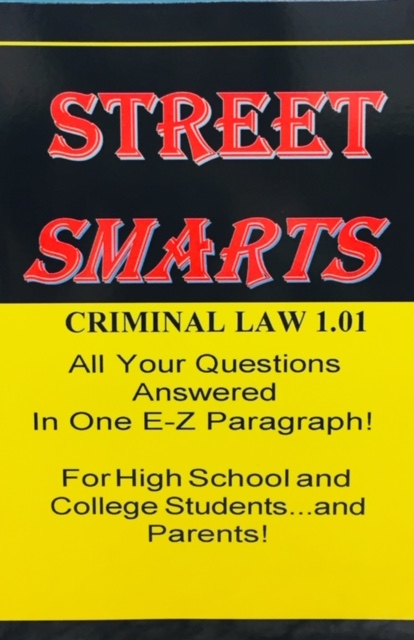
A prominent South Florida defense lawyer and fellow classmate of mine from the good old days of law school at Hofstra, Norm Kent, posted a write-up on a book I recently published, Can The Police Lie To Me?, regarding laws in an easy-to-read format. I just would like to thank Norm for the free advertisement and would also like to point how the 'non-lawyer' person should have some method of obtaining information regarding the law as it is pertinent to them.

Did you know that the police can search you on the basis of someone's lie? This is true, BUT anything found under the search can be thrown out under the following tests: basis of the informant's knowledge, veracity, credibility, reliability, and totality of the circumstances.

Don't be intimidated by anyone and especially the police, if you are a legal citizen in your actions. The book also has many other important pieces of information that you might be interested in learning.

Continue reading "Knowing The Law SHOULD Be Required, Especially in Florida" »

Bookmark and Share

January 28, 2009

Is Having a Board Certified Lawyer Important?

An overlooked quality that one should seek out in a criminal defense attorney is the rigorous qualification of being Board Certified. Certification is the highest level of evaluation conducted by The Florida Bar pertaining to the experience and competency of an attorney in areas of law that are recognized for certification by the Supreme Court of Florida. During certification the bar examines the attorney's skill, special knowledge, and proficiency in their area of law, as well as other areas of law, including the ethics and professionalism in practice.

There are only 23 Board Certified Criminal Trial lawyers in Broward County, all of varying ages, backgrounds, and knowledge bases. Choosing the one right for you is pivotal if you wish to win any court case you engage in. You want one with insight, thoroughness, aggressiveness, and experience.

Continue reading "Is Having a Board Certified Lawyer Important?" »

Bookmark and Share